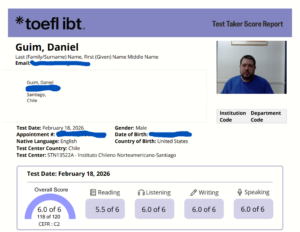
Over the past few months I’ve been analyzing the speaking section of the new TOEFL. Here are my thoughts about the changes, the new questions, and how to prepare.
What was the old TOEFL like?
The previous TOEFL had 4 questions, and the overarching theme was being able to explain things and prepare your speaking.
The independent speaking question asked about a preference, personal experience, or your opinion on a topic. It gave you 15 seconds to think and organize your ideas, and then you had 45 seconds to speak.
The first integrated speaking question presented a campus situation with a written announcement and two students talking about it. You were then given the task to summarize the announcement and one of the student’s opinions about it. Just like the previous question, you had time to prepare your answer but then 60 seconds to speak.
After that, there’s a shift towards academic English. The next question had a short academic text and then listen to a professor talking about the same topic. You then needed to explain the concept from the reading in relation to what the professor talked about. With some thinking time and a minute to respond, this question tested people’s ability to not only integrate information from written and spoken texts but also explain how the information is related.
The last question was simply a short lecture from a professor about an academic topic. You then had to summarize what you heard.
What about the new TOEFL?
The new TOEFL speaking represents a radical shift away from prepared responses and academic English. Now the focus is on speaking spontaneously through two tasks.
In the Listen and Repeat task, you see an image in a setting such as an airport, coffee shop, train station, gym, library, or other place that you find in everyday life.
You then hear a sentence about the image, and after a short pause you need to repeat exactly what was said. The length and complexity of the sentences increase over time, and there are seven sentences in total.
Here’s an example of a Listen and Repeat task with the image you see:
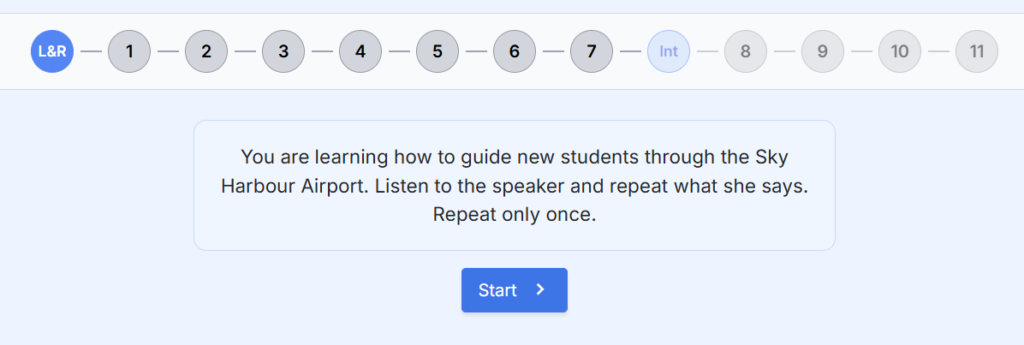
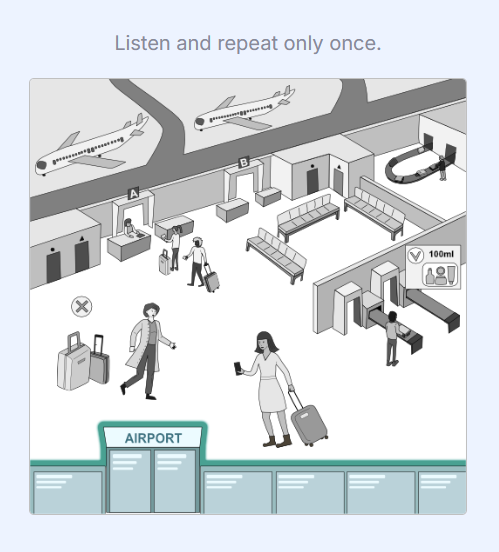
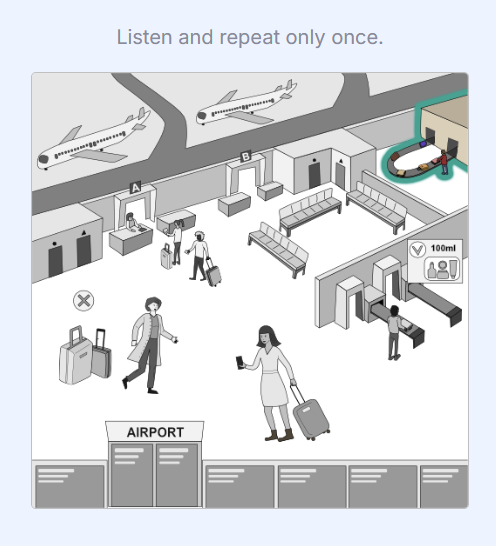
And here are the sentences that you hear and need to repeat:
Sentence 1: Welcome to the international airport.
Sentence 2: Baggage claim is straight ahead.
Sentence 3: You will find restrooms near every main gate.
Sentence 4: Please have your boarding passes and identification ready for security.
Sentence 5: Carry-on liquids must be placed in clear plastic bags.
Sentence 6: Do not leave your luggage unattended at any time.
Sentence 7: If your flight is delayed, you may receive updates through the airline’s mobile app.
The other task is Take an Interview, and it’s exactly what it sounds like. You’re put in the situation that you’re participating in a research study, and you are asked 4 questions. There’s a video of an AI person that explains the context and then asks each question about a theme. It could be something like living in a city, the use of technology, your routine related to studying or working, transportation, or a similar general topic. Once the person has asked the question you need to respond right away and have 45 seconds to speak.
Here’s what you see:
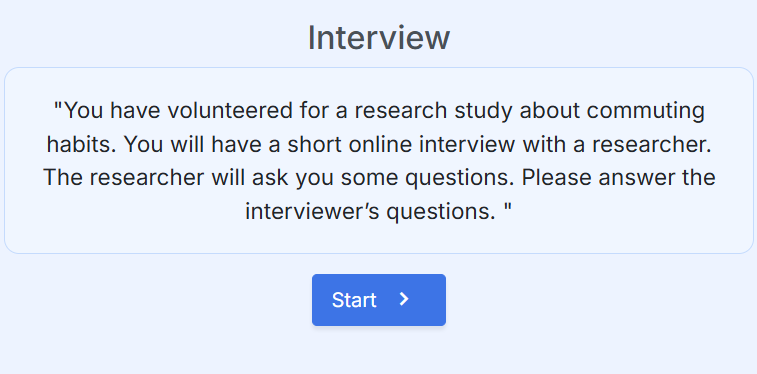
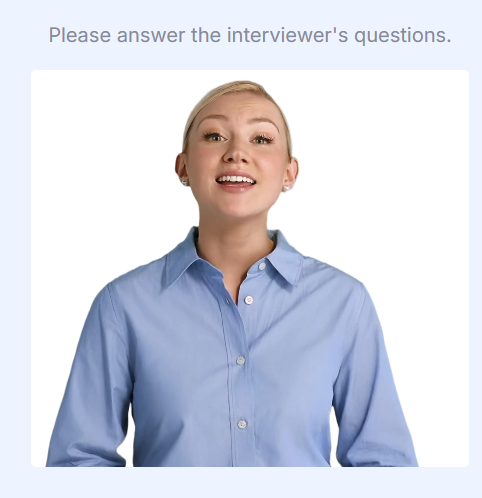
And here are the questions:
Question 1: Thank you for joining the study. Today, I’d like to ask you some questions about your commuting habits. First, is it important to live close to your school or work? Why?
Question 2: Imagine that you could choose to commute by car, which is faster but more expensive, or by public transportation, which is slower but less expensive. Which would you choose, and why?
Question 3: Interesting. Some people believe that commuting can be stressful and tiring. What do you think are one or two different ways to make commuting more enjoyable? Give reasons for your answer.
Question 4: Good points. Lastly, considering advances in technology, some people believe that commuting might disappear entirely. How do you think a severe decline in commuting might affect businesses in positive ways and negative ways? Please give one example of each.
What are my thoughts about these new questions?
I noticed a few things about this when I completed practice tests, both official ones and from My Speaking Score. The first thing is that answering with no time to think is a radical shift from the old TOEFL speaking questions. You don’t have the chance to ask for the question to be repeated, and you need to feel comfortable with giving an answer right away.
When it comes to the Listen and Repeat task, you need to remember exactly what was said. While it seems easy at first, the sentences at the end get to be quite long. There’s also a pause of a few seconds before you can begin speaking, so you need to be able to hold each sentence in your head until it’s time to speak.
Another important consideration is the need to speak for the entire 45 seconds to fill the time. One of the metrics that you’re evaluated on is words per minute, and the less you say the less there is to evaluate (and the lower your words per minute).
One last thing is that the questions are either the types of independent speaking questions from the previous test or variations of them. This means that you should be prepared to talk about a personal experience related to the theme, make a choice between two options, and indicate if you agree or disagree with an idea.
How can I prepare for the new speaking tasks?
The Listen and Repeat task requires a few things. First of all, you need to have a good memory to repeat the exact sentence you hear. You also need to use correct pronunciation; I see the ends of words (think of words like passes, lived, cooked, sentences) and tricky vowels and vowel combinations (words like suit, friend, business, and bought) as obstacles for students. Last but not least, having a wide vocabulary in English will help ensure you know the words that are said, making it easier to exactly replicate what you heard.
The most obvious way is to complete official TOEFL practice questions provided by ETS. You can visit their website to find practice materials (free and paid) at this link.
Another way to prepare is to listen to monologues or watch YouTube videos with actors speaking and repeat exactly what they say. You can record yourself and check your pronunciation.
As for the Take an Interview task, you need to feel comfortable answering questions about topics and speaking for 45 seconds. You can practice talking about everyday topics, work with friends or study partners to ask and answer the questions, and recording your responses will let you see how you can improve.
If you’d like feedback in real time and plenty of practice, I recommend My Speaking Score. They use the same technology that ETS uses to score TOEFL speaking questions, and you have the option to practice for free (but with no scores or feedback) or to purchase credits to get a detailed score analysis.
If you’re interested in getting personal support preparing for TOEFL, you can complete my contact form to see how I can help.
Thanks for reading and I hope this was helpful!