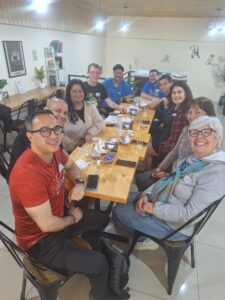
In case you don’t know me and my story, I made the move to Santiago, Chile in February 2010. The job market for teachers was rough when I graduated in 2006, and I wanted a new start in a new part of the world. I arrived with a program as a English teaching assistant in a school, just in time for the big earthquake.
What are some cultural differences I’ve encountered?
There are a lot of things I could write about, but I’ve decided on two for the purpose of this post: physical proximity and contact and an avoidance of saying no.
Your personal bubble and greeting people in Chile
One thing that I noticed early on was that people in Chile have a smaller personal bubble compared to what I was comfortable with when I first arrived. Getting on the bus or subway during rush hour was quite the experience as people packed themselves in like sardines without any concern for other people’s personal space. In social situations I had to get used to people standing closer to me than I felt comfortable with.
In the same way, physical contact is common in Chile. Men and women (or two women) greet each other with a kiss on the cheek, both in the workplace as well as social situations. Men that are friends will give each other a hug, and close male friends will also give a kiss on the cheek. It was an adjustment for me, as before then I wasn’t used to giving many hugs or kisses on the cheek.
The answer is “no”, but you need to figure that out
Another thing that I didn’t understand was the lengths that people will go to in order to avoid saying no. Rather than disappointing someone with a negative response to an social invitation, business proposal, or something similar, people will say something like “That seems like a great idea!” or “I’ll call you.” or they will nod in agreement. The reality is that they don’t want to follow through, but at the same time they don’t want to hurt your feelings. It’s much more common for people to simply stop responding than explain how they really feel or tell you no.
Situations like that have occurred to me in many contexts: people that decided at the last minute that they didn’t want to work with me to improve their English, some that didn’t seem interested in becoming friends, and not surprisingly with potential dates. The challenging part for me is not knowing what happened; did they find someone else that charges less money for their services? Was there a problem with the schedule that came up at the last minute? Did I say something that annoyed someone? In any case, I’ve learned that after a certain point I have to assume that they’re no longer interested and move on.
How this relates to living in the United States
As I alluded to earlier, in the United States people usually have a personal bubble around them with the distance that they keep from other people; anyone entering into that bubble is considered a partner, close friend, family member, etc. Greeting someone you don’t know with a kiss on the cheek doesn’t happen in the United States; it might actually get you pushed away or slapped in the wrong circumstance, like what almost happened to a former student when he first moved to the States. We reserve physical contact like hugs and kisses for family and close friends.
When it comes to telling someone no in the United States, I feel like it’s quite simple. We thank the person for the invitation or opportunity, and we then say that we can’t accept it. We might provide a reason, but it’s not necessary. If it’s simply a case of a schedule not working out, we can express our desire to meet another time or to connect in another way in the future.
If you go to the United States and simply avoid situations rather than giving a response, you can be seen as rude and inconsiderate. Not knowing what happened takes up mental space in a person’s brain, and they are left with their last impression of you ghosting them. Doing so can have repercussions in social, academic, and work situations.
An opportunity
If you’d like to learn about more cultural differences so that you’re prepared to live in the United States or another country, you can attend my free webinar about cultural adjustment.
It’s on Tuesday June 9th at 7:30 PM in Chile.

We will discuss:
- Common stereotypes about Americans and living in the United States and how true they are
- Key cultural differences between Chile and the United States
- Important steps you should take to be prepared
There will also be a Q and A at the end.
You can register by clicking here.
Have you had similar experiences living in Chile? If so, feel free to leave a comment below.